
I have taught courses at Columbia University and Florida State University. I have experience teaching both history and religion courses in lecture and seminar format, as well as experience tutoring high school students with research projects on East Asia.
I emphasize developing analytical skills through the use of primary sources, forming historical research questions, and independent investigation. My students analyze not only historical texts and secondary literature but also material objects. My classes integrate digital humanities tools, such as ArcGIS Story Maps, to teach technical skills and develop inquiry beyond the text.
Courses taught
CHINA’S GLOBAL HISTORIES

Photo by Lucía Vázquez. Source.
Taking a long-term and multiregional approach, this seminar invites upper-level undergraduate and graduate students to investigate what China means in different historical periods, its interconnections with other regions, and what China can teach us about Global History and vice versa. This course examines histories of trade and economy, migration, empire and imperialism, war and conquest, material history, science, medicine and technology, religion, gender, ideology, and modern nation-building. Students discuss the agency of individuals and states; the usefulness of “space” as a tool of analysis; and the complexities of China’s global role, past and present. This course puts particular emphasis on connections beyond Europe: that is, with Africa, the Islamic world, maritime Asia, and the Americas. It challenges Eurocentric, Sinocentric, and nation-based methodologies while pushing toward new narratives and conceptual vocabularies.
HISTORY OF MODERN CHINA II


This course explores major issues in modern Chinese history in the long 20th century. It begins with the fall of the Manchu Qing Dynasty (f. 1636) and the founding of a Chinese republic in 1911/1912. Various ideologies and actors competed to define the political system, social structure, and cultural norms of the new nation. Two wars, one with Japan and the other civil, again threw China into disarray. With the founding of the People’s Republic in 1949, the socialist state commenced a series of political movements with varying, sometimes disastrous, results and culminating in the Cultural Revolution, an event of world-historical significance. Economic reforms after 1976 shepherded the meteoric resurgence of the Chinese economy with political reforms that left a mixed legacy. This course concludes with the latest historical development from the 1990s to the present moment, with China’s future rendered uncertain by geopolitical tensions and the rise of a new strongman.
THE BUDDHIST TRADITION

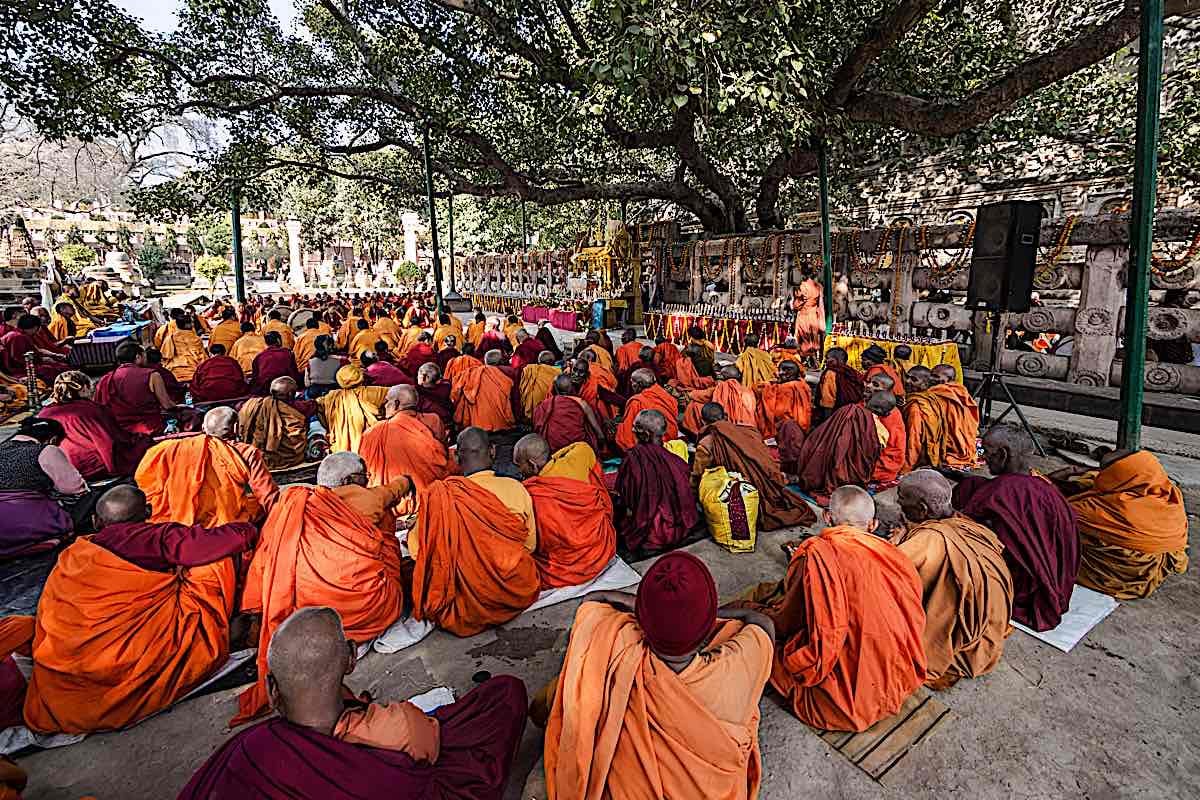
This course is a historical and thematic survey of the Buddhist tradition in Asia from its beginnings through the modern period. Topics covered include origins and history, doctrine, ethical beliefs, meditation, ritual, and monastic and popular traditions. Some attention will also be given to contemporary forms of Buddhism outside of Asia, in Europe and America. This course begins with foundational concepts in Buddhism, and the second half of the course explores the history of Buddhist schools, theories, and practices in different regions of the world and over a span of 2,500 years.